

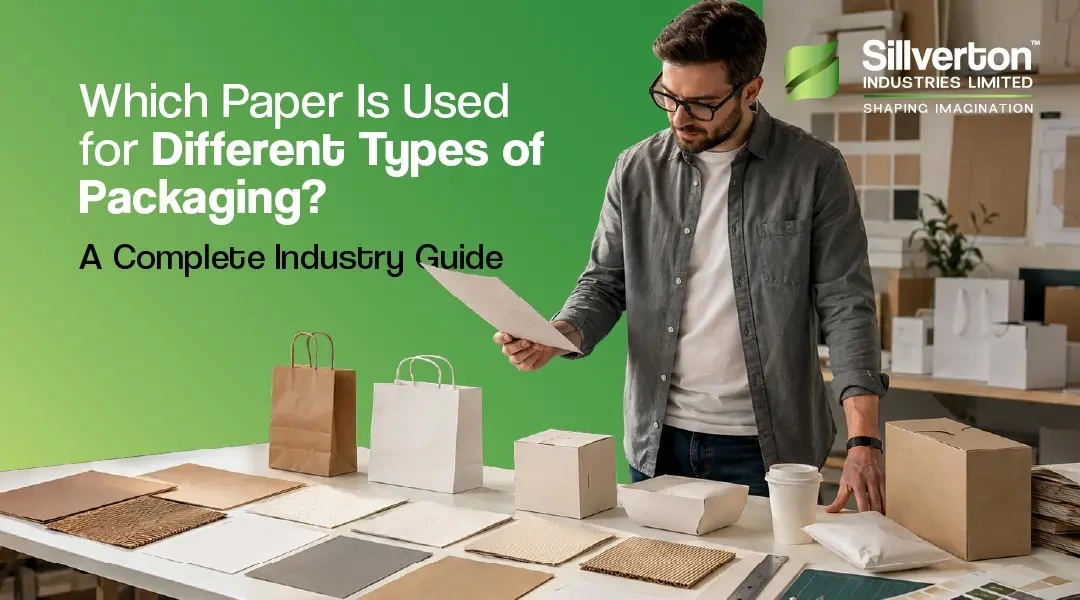
Selecting the right paper is one of the most important decisions in packaging design. While appearance matters, the primary role of packaging is to protect products, support efficient logistics, meet regulatory requirements, and reinforce brand value. The paper chosen for a packaging application directly influences durability, print quality, sustainability goals, and overall operational efficiency.
As businesses increasingly invest in Premium Packaging, understanding which paper suits different packaging applications has become essential for procurement teams, packaging managers, and product developers. Rather than choosing a material based solely on cost, successful packaging strategies evaluate how paper performs throughout the product's lifecycle from production and transportation to retail display and end-user experience.
This guide explores the most common paper types used across industries and explains how to match them with the right packaging requirements.
Why Paper Selection Matters in Modern Packaging
Every packaging application has different functional requirements. A grocery carry bag experiences different stresses than a pharmaceutical carton, while liquid packaging requires entirely different barrier properties compared to secondary transport packaging.
Choosing the wrong paper can lead to:
- Reduced product protection during storage or transit
- Lower printing quality affecting brand presentation
- Increased packaging waste due to damage
- Higher operational costs through product returns
- Difficulty meeting sustainability or compliance objectives
For businesses seeking Premium Packaging, paper selection should balance performance, appearance, manufacturability, and environmental responsibility.
Common Paper Types and Their Packaging Applications
Kraft Paper
Kraft paper is recognised for its excellent strength and durability, making it suitable for packaging that must withstand handling and transportation.
Typical applications include:
- Grocery bags
- Shopping bags
- Industrial wrapping
- E-commerce mailers
- Secondary packaging
Its natural appearance also aligns well with brands looking for recyclable and fibre-based packaging solutions without compromising structural integrity.
Kraft and Liner Papers
Kraft and liner papers are designed for packaging applications where strength, durability, tear resistance, and reliable performance during transportation are essential. These papers are particularly suitable for secondary and industrial packaging applications where packaging needs to withstand handling, stacking, and movement across the supply chain.
Common applications include:
- Corrugated boxes
- Carton packaging
- Industrial packaging
- E-commerce and transport packaging
- Secondary packaging
- Grocery and shopping bags
Depending on the application, kraft and liner papers are available in different grades and GSM ranges to provide the required balance of strength, printability, and structural performance. Sillverton offers options including White Kraft Liner, Virgin Top Liner, Virgin Kraft Liner, High RCT Liner Kraft, and Liner Kraft Paper.
Food and Grocery Packaging Papers
Food and grocery packaging requires papers that combine functional performance with suitability for direct or indirect food packaging applications. Depending on the product and packaging format, different paper grades can provide properties such as strength, grease resistance, food-contact suitability, and reliable wrapping performance.
Typical applications include:
- Grocery and shopping bags
- Food wrapping
- Bakery packaging
- Oil and grease-resistant food packaging
- Baking applications
- Food service packaging
Sillverton's food and grocery packaging portfolio includes unbleached and bleached kraft bags, natural-shade bags, bake oven paper, oil and grease-proof paper, vegetable parchment paper, and food wrapping paper. These options allow businesses to select paper according to the specific requirements of the food product and packaging format.
Specialty and Premium Papers
Specialty papers are developed for packaging and presentation applications where standard packaging paper may not provide the required combination of appearance, print performance, folding strength, or functional properties.
Depending on the application, specialty and premium papers can support:
- High-quality printing and colour reproduction
- Consistent thickness and calliper
- Good folding strength
- Premium visual presentation
- Functional food-packaging requirements
- Customised packaging and presentation formats
These papers can be used across specialised applications such as premium invitation and wedding cards, food packaging, and other customised paper-based formats. Sillverton's premium wedding and invitation card paper, for example, is designed for colour coating and printing and offers uniform calliper and excellent folding strength.
Paper for Liquid Packaging
Packaging liquid products demands multiple performance layers working together to protect product quality.
Paper used in liquid packaging is designed to support:
- Structural stability
- Barrier integration
- Safe filling processes
- Reliable transportation
- Consumer convenience
Selecting appropriate paper helps manufacturers maintain product integrity throughout distribution while supporting efficient packaging operations.
Matching Paper with Packaging Applications
Rather than asking which paper is "best," businesses should ask which paper best supports their packaging objectives.
| Packaging Application | Recommended Paper Characteristics |
|---|---|
| Food & Beverage | Food-safe, print-friendly, appropriate barrier compatibility |
| FMCG | Excellent print quality, folding performance, visual appeal |
| Retail Packaging | Premium finish, branding capability, durability |
| Logistics & Secondary Packaging | High strength, stacking performance, transport protection |
| Grocery Packaging | Tear resistance, load-bearing capability, recyclability |
| Liquid Packaging | Structural consistency, barrier compatibility, dimensional stability |
Evaluating packaging requirements in this way helps organisations optimise both performance and long-term packaging costs.
What Businesses Should Consider Before Choosing Packaging Paper
Selecting paper involves more than comparing GSM or price quotations. Procurement and packaging teams should evaluate several operational factors.
Product Characteristics
Paper should be selected based on:
- Product weight
- Fragility
- Shelf life
- Moisture sensitivity
- Transportation conditions
These elements influence the necessary strength and performance characteristics.
Printing Requirements
Packaging often serves as the first point of customer interaction.
Consider:
- Brand colour consistency
- Surface smoothness
- Graphic quality
- Finishing requirements
- Labelling compatibility
Sustainability Objectives
Many organisations are reducing packaging waste while improving material efficiency.
Instead of relying on broad sustainability claims, businesses should assess whether paper grades support:
- Responsible fibre sourcing
- Efficient material utilisation
- Recyclability within applicable waste streams
- Packaging optimisation without unnecessary material usage
Manufacturing Compatibility
Paper should integrate efficiently with existing packaging operations.
Evaluate factors such as:
- Converting performance
- Folding consistency
- Machine compatibility
- Storage stability
- Supply reliability
Reliable material performance helps minimise production interruptions and maintain packaging quality.
Why Choosing the Right Manufacturing Partner Matters
Even the right paper grade may underperform if manufacturing consistency varies. Businesses should evaluate a Paper Manufacturer in India based not only on product range but also on technical capability, quality assurance, production consistency, and ability to support evolving packaging requirements.
Experienced manufacturers work collaboratively with customers to recommend paper grades that align with application needs, operational efficiency, and long-term packaging objectives.
As businesses increasingly seek dependable partners rather than commodity suppliers, many packaging companies in India look for manufacturers capable of delivering consistent quality, technical guidance, and scalable production.
Collaborating with an experienced packaging solutions provider allows organisations to make educated material choices that enhance packaging effectiveness while aligning with business objectives.
Conclusion
The paper used in packaging has a direct impact on product protection, production efficiency, brand presentation, and supply chain performance. Understanding the strengths of different paper grades allows businesses to select materials that align with specific packaging applications rather than relying on one-size-fits-all solutions.
For organisations investing in Premium Packaging, partnering with an experienced Paper Manufacturer in India brings valuable technical expertise alongside reliable manufacturing capabilities. Sillverton Industries works closely with businesses across FMCG, food and beverage, retail, pharmaceutical, and logistics sectors to develop paper-based packaging solutions that balance performance, quality, and sustainability. Explore Sillverton's product portfolio or connect with its team to discuss packaging requirements tailored to your application.
Recent Blog Posts
From Books to Drawing Books: Applications of Silver Bright Paper
Paper selection for books, notebooks, and drawing books is often treated as a GSM or cost decision. In practice, publishers, converters, and stationery...
Read More
Which Paper Is Used for Different Types of Packaging? A Complete Industry Guide
Selecting the right paper is one of the most important decisions in packaging design. While appearance matters, the primary role of packaging is to protect...
Read More
What Is Oil and Grease Proof Paper? Everything You Need to Know
Packaging for food products must do more than contain the product, it must preserve quality, prevent leakage, maintain hygiene, and support a positive...
Read More