

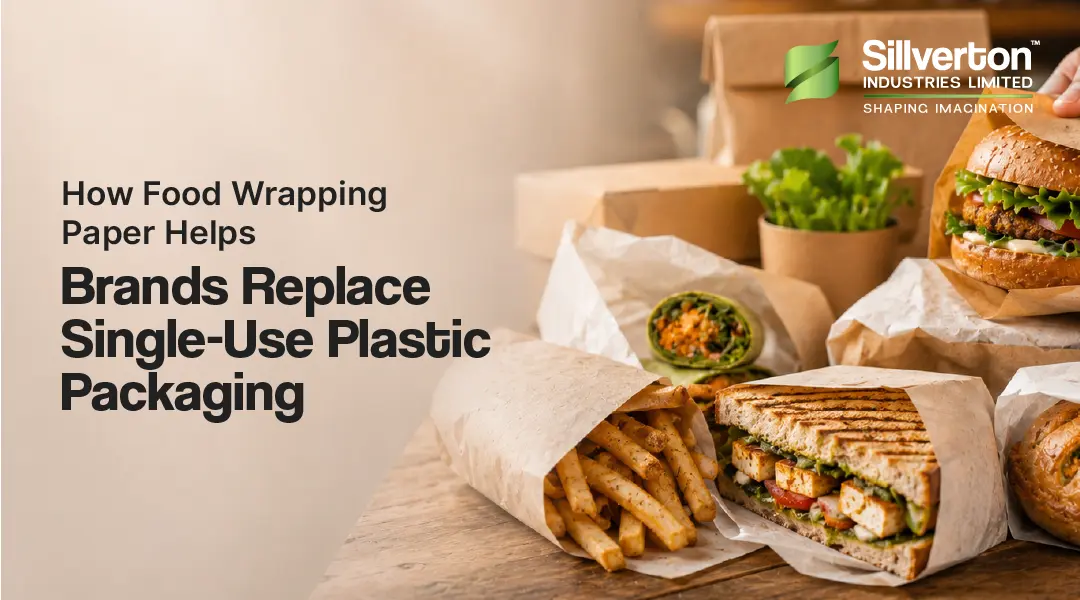
Across the food service and retail sectors, packaging decisions are changing rapidly. Regulatory pressure, changing consumer expectations, and operational sustainability goals are pushing brands to reconsider the role of single-use plastic in everyday packaging applications.
For QSR chains, bakeries, grocery retailers, cloud kitchens, and packaged food businesses, the shift is no longer only about replacing plastic visually. The real challenge is finding packaging materials that maintain food handling performance, operational efficiency, and brand presentation at scale.
This is where Food Wrapping Paper is becoming an important packaging alternative across multiple food-contact applications.
Why Food Packaging Businesses Are Rethinking Plastic
Single-use plastic packaging has traditionally been preferred because of:
- Moisture resistance
- Lightweight handling
- Low upfront cost
- Ease of mass production
However, businesses today are evaluating broader packaging impacts, including:
- Regulatory compliance requirements
- Waste management concerns
- Consumer packaging perception
- Sustainability reporting targets
- Packaging recyclability expectations
For food businesses operating high-volume takeaway or retail packaging systems, switching materials requires careful operational evaluation rather than trend-driven decisions.
The packaging must still support:
- Food safety
- Product handling efficiency
- Printability
- Storage stability
- Supply consistency
- Cost management
What Is Food Wrapping Paper?
Food Wrapping Paper refers to specialized paper grades designed for direct or indirect food-contact applications.
Depending on the use case, the material may be engineered for:
- Grease resistance
- Print compatibility
- Foldability
- Moisture management
- Heat tolerance
- Product protection during handling and transport
Today, paper for food packaging is widely used across:
- Burger and sandwich wraps
- Bakery packaging
- Grocery counter wrapping
- Deli sheets
- Tray liners
- QSR takeaway applications
- Confectionery wrapping
- Fresh produce packaging
The suitability of each paper grade depends on the food category, operational environment, and packaging workflow.
How Food Wrapping Paper Supports Plastic Replacement
Improved Recyclability and Disposal Compatibility
Compared to many plastic-based alternatives, paper packaging systems are often easier to integrate into existing recycling streams depending on coating structure and local waste infrastructure.
For businesses, this supports:
- Packaging sustainability initiatives
- Brand-level environmental targets
- Reduced dependency on difficult-to-process plastic formats
However, material selection still matters. Not all food packaging paper roll structures perform equally across food-contact applications.
Better Brand Presentation
Packaging has become part of the customer experience, especially in QSR, café, and premium retail segments.
Food Wrapping Paper supports:
- Better print aesthetics
- Custom branding opportunities
- Cleaner presentation for takeaway products
- More natural packaging appearance
For customer-facing businesses, packaging texture and visual presentation increasingly influence brand perception.
Operational Flexibility
Today's businesses employ a variety of packaging formats based on food categories and service strategies.
Common formats include:
- Packing paper sheets for counter-service and bakery use
- Wrapping roll paper for automated or high-speed wrapping systems
- Food packing paper roll solutions for takeaway packaging lines
- Custom-sized food packaging paper roll formats for retail and QSR operations
This flexibility helps businesses optimize packaging workflows while reducing unnecessary material usage.
Support for Lightweight Packaging Systems
Paper-based wrapping formats can help reduce packaging complexity in certain applications by replacing multilayer plastic structures used for short-duration food handling.
For fast-moving food operations, this can improve:
- Packaging efficiency
- Inventory management
- Packaging storage optimization
- Handling convenience during peak operational hours
What Businesses Should Evaluate Before Switching
Replacing plastic packaging requires careful technical assessment.
Food businesses should evaluate:
- Grease resistance performance
- Food-contact compliance
- Moisture handling capability
- Heat resistance requirements
- Printability for branding
- Machine compatibility
- Packaging durability during transport
- Recyclability considerations
Different food categories create different packaging demands. For example:
- Bakery items require breathability balance
- Fried foods need grease management
- Fresh products may require moisture control
- QSR packaging often prioritizes fast handling and stackability
Selecting unsuitable paper grades can create operational issues including tearing, leakage, or inconsistent packaging performance.
The Growing Role of Paper Packaging Manufacturers
As food brands transition toward alternative packaging materials, supplier capability is becoming increasingly important.
A packaging partner should be able to support:
- Consistent paper quality
- Scalable supply capability
- Food-grade manufacturing standards
- Customization flexibility
- Application-specific recommendations
Sillverton Industries Limited supports paper-based packaging requirements with a manufacturing-focused approach aligned with packaging performance, operational efficiency, and evolving sustainability expectations across food and retail sectors.
Conclusion
The move away from single-use plastic packaging is reshaping food packaging strategies across retail, QSR, bakery, and grocery sectors.
Food Wrapping Paper offers businesses a practical pathway toward more adaptable and packaging-conscious solutions while maintaining operational usability and brand presentation standards.
For businesses evaluating packaging transitions, long-term success depends on selecting paper solutions that balance functionality, compliance, packaging efficiency, and supply reliability.
Recent Blog Posts
From Books to Drawing Books: Applications of Silver Bright Paper
Paper selection for books, notebooks, and drawing books is often treated as a GSM or cost decision. In practice, publishers, converters, and stationery...
Read More
Which Paper Is Used for Different Types of Packaging? A Complete Industry Guide
Selecting the right paper is one of the most important decisions in packaging design. While appearance matters, the primary role of packaging is to protect...
Read More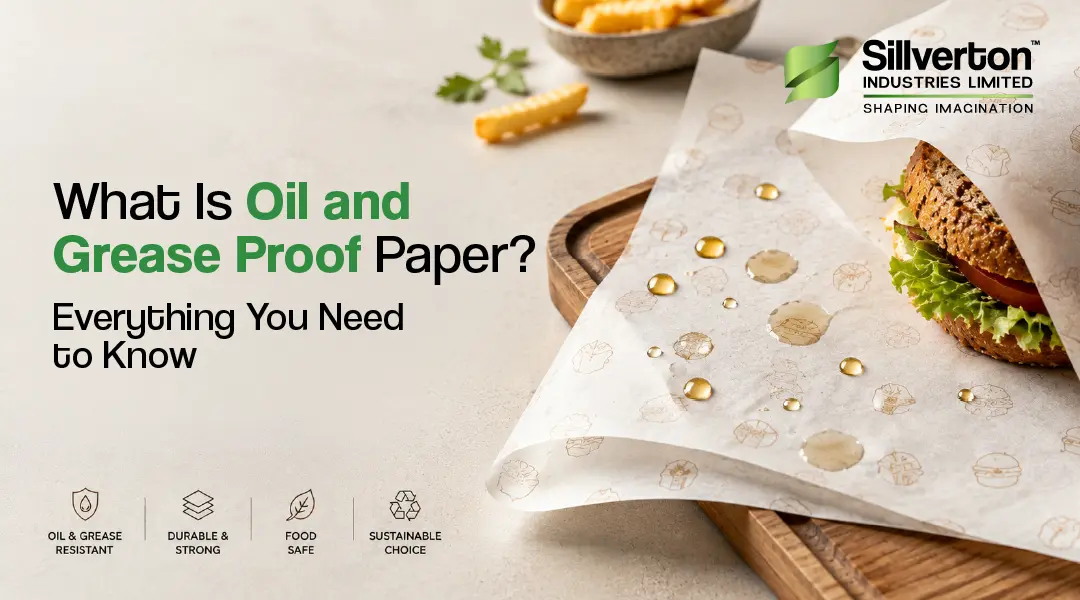
What Is Oil and Grease Proof Paper? Everything You Need to Know
Packaging for food products must do more than contain the product, it must preserve quality, prevent leakage, maintain hygiene, and support a positive...
Read More