
Choosing the wrong base paper can lead to printing defects, weak laminate bonding, web breaks, and unnecessary material waste. For packaging converters, these problems directly affect production efficiency, product quality, and manufacturing costs.
Selecting the right Opaque Base Paper for Lamination requires more than comparing GSM and price. Buyers must evaluate opacity, surface smoothness, strength, dimensional stability, and compatibility with the intended lamination process.
Understanding these properties helps procurement and packaging teams choose materials that perform consistently from printing through final conversion.
What Is Opaque Base Paper for Lamination?
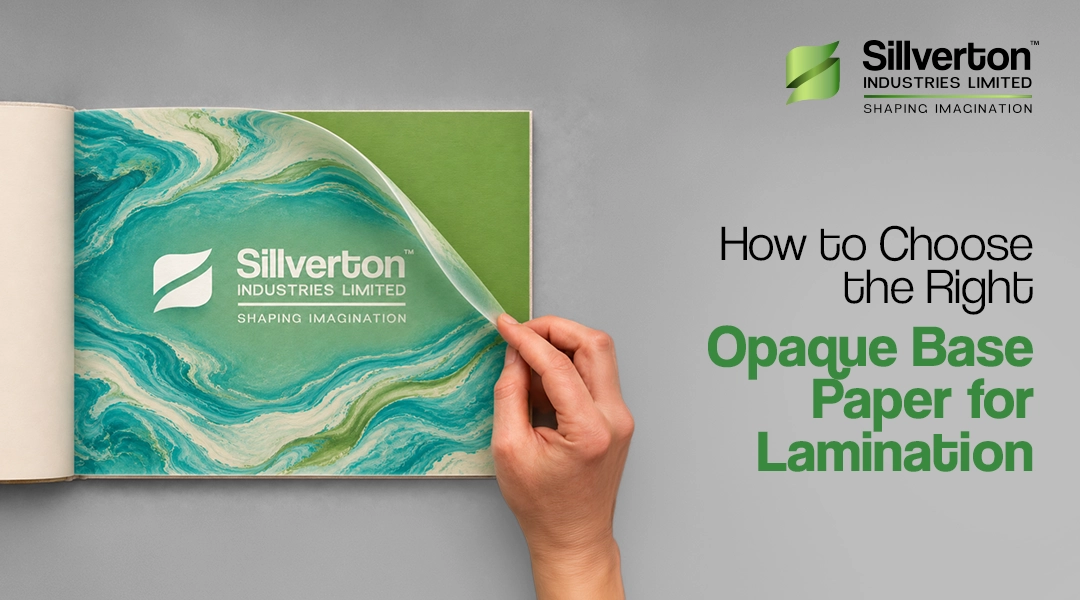
Opaque base paper is a specialized paper substrate designed to limit light transmission while supporting printing and lamination with materials such as polymer films or aluminum foil.
Its opacity helps prevent underlying layers or graphics from showing through, maintaining consistent packaging appearance.
It is particularly relevant for flexible packaging applications, including confectionery wrappers, powdered-product sachets, and selected pharmaceutical packaging structures.
Unlike ordinary printing paper, lamination base paper must withstand multiple converting operations without compromising the integrity of the finished laminate.
Key Factors to Consider When Selecting Opaque Base Paper
1. Choose the Right GSM for Your Application
Grammage, measured in grams per square metre (GSM), influences material consumption, handling characteristics, and converting performance.
Lower-GSM papers may support lightweight flexible packaging, while heavier grades may be appropriate where greater handling strength or stiffness is required.
However, higher GSM does not automatically guarantee better performance.
Sillverton Industries offers opaque laminating base paper in the 40–80 GSM range within its flexible packaging portfolio. This allows buyers to explore different grammages based on application requirements.
2. Evaluate Opacity and Print Quality
Opacity determines how effectively paper conceals underlying materials, printing, or contrasting surfaces.
Insufficient opacity can cause show-through, affecting colour consistency and packaging presentation.
For printed laminates, buyers should examine:
- Opacity: Ability to minimise unwanted show-through.
- Surface smoothness: Support for uniform ink transfer.
- Formation: Consistency of fibre distribution across the sheet.
- Brightness: Suitability for the desired printed appearance.
Request opacity measurements and printed samples rather than relying solely on visual inspection.
3. Check Strength and Machine Runnability
Lamination lines subject paper webs to tension, pressure, and sometimes heat.
Poor tensile strength or inconsistent paper properties may contribute to web breaks, misregistration, and production interruptions.
Evaluate machine-direction and cross-direction tensile strength, tear resistance, and reel quality.
A suitable paper should maintain reliable performance at the converter's operating speed, helping reduce downtime and rejected material.
4. Assess Surface and Lamination Compatibility
Bond strength depends on the interaction between paper, adhesive, coating, and the adjoining substrate.
Excessive absorbency may increase adhesive consumption, while unsuitable surface characteristics can affect bonding consistency.
Buyers should test the selected paper with their actual adhesive system, lamination temperature, pressure, and curing conditions.
Peel-strength testing and inspection for delamination are essential before commercial approval.
5. Verify Moisture and Dimensional Stability
Paper responds to changes in environmental humidity.
Uncontrolled moisture variation can contribute to curling, wrinkles, dimensional changes, and printing registration problems.
For continuous production, request moisture specifications and assess paper performance after storage under actual factory conditions.
Consistent dimensional behavior supports smoother printing, lamination, slitting, and pouch-making operations.
Why Sillverton Industries Is a Relevant Manufacturing Partner
When evaluating an Opaque Laminating Base Paper Manufacturer in India, product specifications should be considered alongside application knowledge and manufacturing consistency.
Sillverton Industries Limited, based in Muzaffarnagar, Uttar Pradesh, offers opaque laminating base paper for flexible packaging and pharmaceutical applications.
Its flexible packaging portfolio focuses on smoothness, uniform caliper, and strength, supporting the demands of downstream converting processes.
For buyers comparing Opaque Paper Manufacturers & Supplier options, these characteristics provide a practical starting point for technical evaluation.
How to Evaluate a Supplier Before Finalising Procurement
Choosing an opaque paper manufacturer in India requires evidence of consistency across production batches, not simply an acceptable initial sample.
Before placing commercial orders:
- Request technical data sheets and relevant test results.
- Confirm GSM tolerance, reel dimensions, and packaging specifications.
- Conduct printing and lamination trials.
- Evaluate rejection rates and laminate bond performance.
- Review supply continuity and quality documentation.
A dependable lamination paper manufacturer in India should support specification discussions and help buyers assess material suitability for their converting processes.
Make an Informed Packaging Material Decision
The right opaque base paper should deliver reliable printing, bonding, and converting performance without unnecessary material consumption.
Explore Sillverton Industries' flexible packaging paper solutions and connect with its team to discuss GSM requirements, application compatibility, and material selection for your lamination process.