

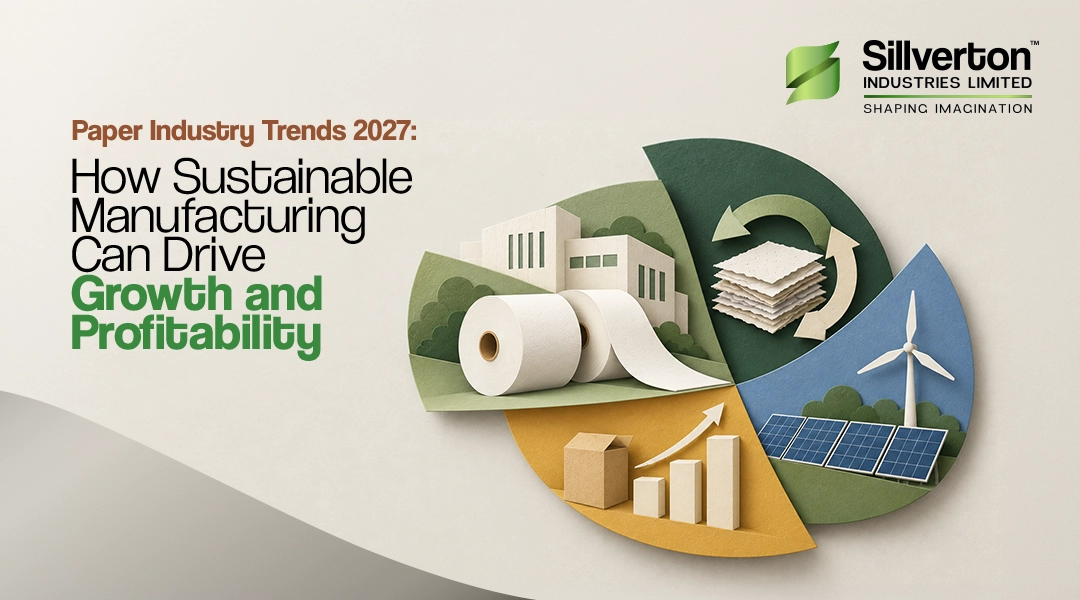
For paper manufacturers, profitability in 2027 will depend on more than production capacity or sales volume. Energy consumption, fibre efficiency, water management and the ability to meet changing packaging specifications will influence manufacturing costs and competitiveness.
As buyers seek packaging materials that balance performance, cost and environmental requirements, manufacturers must reconsider how resources are used across production.
Understanding paper industry trends 2027 helps manufacturers and packaging procurement teams identify where operational efficiency, responsible resource management and product development can support sustainable business growth.
1. Resource Efficiency Will Become a Competitive Priority
One of the important paper industry trends is the growing commercial relevance of resource efficiency.
Paper production requires substantial quantities of fibre, water, energy and processing chemicals. Inefficient consumption increases production costs and can create additional treatment and waste-management requirements.
Manufacturers can address these pressures through:
- Improving fibre recovery and reducing production losses.
- Monitoring energy consumption across pulping, drying and finishing.
- Optimising water circulation and treatment systems.
- Reducing off-specification production through better process control.
These improvements support sustainable paper manufacturing while helping businesses manage operating costs.
For packaging buyers, consistent production processes can also support dependable paper specifications and fewer converting-related problems.
2. Packaging Performance Will Shape Product Development
Sustainability requirements do not eliminate the need for reliable packaging performance.
Food, FMCG, retail and logistics businesses still require papers that meet specific demands for strength, printability, surface properties and converting compatibility.
Among the anticipated paper manufacturing trends 2027, greater attention to application-specific paper development will remain commercially relevant.
For example, corrugated packaging manufacturers may prioritise liner strength and board performance, while food packaging converters may require controlled grease resistance or other functional properties.
Manufacturers that align paper specifications with actual converting and distribution conditions can help customers avoid unnecessary material consumption without compromising packaging reliability.
3. Water and Energy Management Will Influence Profitability
Water and energy efficiency have direct implications for paper mill operating expenses.
Drying operations, steam generation and process-water treatment are areas where manufacturers can evaluate opportunities for improved efficiency.
Practical measures include:
- Maintaining steam systems to reduce avoidable energy losses.
- Recovering usable heat where technically feasible.
- Monitoring water consumption at individual production stages.
- Improving treatment and reuse of process water.
Investment decisions should consider expected savings, equipment costs, production requirements and maintenance implications.
For the sustainable paper industry, measurable resource improvements provide a stronger business case than broad environmental commitments.
4. Recycled Fibre and Responsible Sourcing Will Require Closer Evaluation
Recovered fibre offers an important raw material option for paper manufacturing in India, but its commercial value depends on availability, quality and processing requirements.
Manufacturers need to evaluate contamination levels, fibre characteristics and the suitability of recovered material for specific paper grades.
For buyers, recycled content should be assessed alongside functional performance, applicable product requirements and end-of-life considerations.
Responsible sourcing also involves maintaining reliable material supplies and documenting relevant environmental claims.
5. Manufacturing Technology Will Support More Consistent Output
The future of paper manufacturing will increasingly involve better use of production data and process monitoring.
Automated quality checks, moisture monitoring and predictive maintenance can help manufacturers identify deviations before they create significant material losses.
For packaging converters, improved consistency in paper properties can reduce processing interruptions and support predictable finished-pack performance.
These investments should be assessed against measurable benefits, including reduced waste, improved machine availability and lower production costs.
How Can Sillverton Industries Support This Transition?
Sillverton Industries operates in a market where paper performance and manufacturing efficiency are closely connected to customer requirements.
Its relevance to this transition lies in supplying paper for packaging applications where material selection must account for converting performance, protection and resource efficiency.
For buyers, evaluating paper specifications alongside application requirements provides a practical basis for discussing performance and sustainability objectives with manufacturers.
Conclusion
The direction of paper manufacturing trends 2027 points towards a closer relationship between resource management, product quality and financial performance.
For manufacturers, growth opportunities will depend on managing input costs, improving operational efficiency and responding to packaging requirements without compromising functionality.
Explore Sillverton Industries' paper offerings and connect with its team to discuss material specifications suited to your packaging applications and business requirements.